From Petri Dish to Production Floor: Why Synthetic Biology Cannot Scale Its Way Out of the Lab
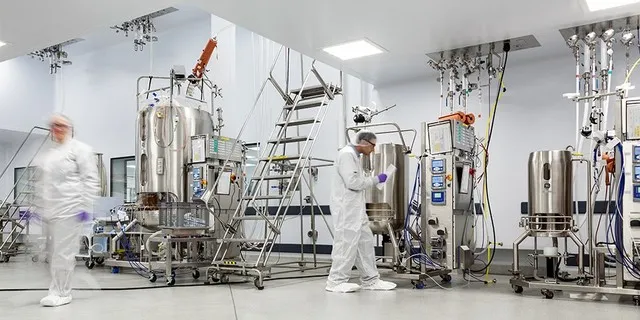
Photo: biotech laboratory fermentation biomanufacturing industrial scale production, via www.ipsdb.com
American synthetic biology has a credibility problem—not scientific credibility, which it possesses in abundance, but operational credibility. The field's researchers are producing genuinely transformative work: engineered organisms that synthesize pharmaceuticals, biosensors capable of detecting pathogens at parts-per-trillion concentrations, cellular factories designed to manufacture materials that petrochemical processes cannot. The science is advancing. The manufacturing infrastructure required to deliver that science to the world is not keeping pace, and the gap between the two is widening.
This is not a funding problem in the conventional sense. Venture capital investment in US synthetic biology companies exceeded $4 billion annually in recent years. The National Institutes of Health, DARPA's Biological Technologies Office, and the Department of Energy collectively direct hundreds of millions of dollars toward the field each year. The bottleneck is structural, not financial—and structural problems tend to be considerably harder to solve.
The Handoff That Breaks Everything
In most technology sectors, the transition from prototype to production, while challenging, follows reasonably well-understood engineering pathways. A chip design validated in simulation can be handed to a foundry operating standardized processes. A software product tested in a development environment can be deployed to cloud infrastructure running common protocols.
Synthetic biology does not have equivalents of the foundry or the cloud. The handoff from laboratory-scale discovery to industrial-scale manufacturing requires a sequence of translation steps—each of which introduces new biological variables, regulatory considerations, and quality control demands—for which no standardized framework currently exists.
A research team at a university or early-stage startup might engineer a yeast strain capable of producing a target compound with impressive yield under controlled laboratory conditions. Scaling that strain to a 10,000-liter fermentation vessel introduces fluid dynamics, oxygen transfer rates, heat gradients, and contamination risks that fundamentally alter the biological environment. Organisms optimized for bench-scale performance frequently underperform or fail entirely at industrial scale. Redesigning them for the production environment can take years and consume resources that smaller organizations do not have.
DNA Synthesis: The Upstream Constraint
The manufacturing problem begins upstream, with DNA synthesis itself. Constructing the genetic sequences that define engineered organisms requires synthesized DNA at costs and error rates that, despite significant improvement over the past decade, remain limiting factors for complex designs.
The cost of synthesizing a base pair of DNA has fallen from roughly $4 in 2000 to fractions of a cent today. But the synthesis of long, complex sequences—genes, operons, or entire metabolic pathways—still encounters error rates that necessitate extensive verification and correction. For research purposes, this is manageable. For manufacturing purposes, where consistency across production batches is a regulatory and commercial requirement, it introduces variability that quality systems must account for at considerable expense.
A small number of US-based companies, including Twist Bioscience and Integrated DNA Technologies, dominate commercial DNA synthesis capacity. Their throughput, while substantial, represents a genuine chokepoint for the broader industry. When demand spikes—as it did during the COVID-19 pandemic, when synthetic biology tools were deployed for diagnostic and therapeutic development at unprecedented speed—lead times extend and prioritization decisions ripple through downstream development pipelines.
Standardization: The Problem Nobody Wants to Own
Perhaps the most consequential gap in synthetic biology's manufacturing infrastructure is the absence of widely adopted standards. In the semiconductor industry, standardized design rules, process design kits, and interface specifications allow components designed by one organization to be manufactured by another with predictable results. Synthetic biology lacks comparable infrastructure.
Biological parts—promoters, ribosome binding sites, coding sequences, terminators—are catalogued in repositories like the iGEM Registry of Standard Biological Parts, but the standardization of those parts is incomplete and inconsistently enforced. A part characterized in one chassis organism may behave unpredictably in another. Measurement standards for biological activity are not harmonized across laboratories, meaning that performance data generated by one team cannot always be compared meaningfully to data from another.
This absence of standards imposes costs at every stage of the development pipeline. Contract development and manufacturing organizations (CDMOs) working with synthetic biology clients must invest significant effort in characterizing incoming biological materials before production work can begin. Regulatory submissions to the FDA require extensive documentation of biological consistency that standardized parts and processes would make considerably more tractable.
The Bioeconomy Initiative launched under the Biden administration identified standardization as a priority, and organizations including NIST have active programs aimed at developing measurement standards for synthetic biology. Progress has been real but incremental. The field moves faster than standards bodies are structured to accommodate.
The CDMO Capacity Deficit
For pharmaceutical and specialty chemical applications, contract development and manufacturing organizations represent the primary pathway through which synthetic biology innovations reach commercial scale. The US CDMO landscape for biologics is well-developed, with established players serving the monoclonal antibody and recombinant protein markets. But capacity specifically configured for the novel fermentation processes, cell-free systems, and non-standard organisms that synthetic biology increasingly employs is limited.
This creates a two-tier problem. Large pharmaceutical companies with established CDMO relationships and the resources to fund dedicated manufacturing development can navigate the landscape. Smaller synthetic biology companies—many of which are developing the field's most innovative applications—often cannot. They face long queues for CDMO capacity, high minimum batch sizes relative to their development stage needs, and a scarcity of manufacturing partners with genuine expertise in their specific biological systems.
Several US-based synthetic biology companies have responded by building in-house manufacturing capacity, accepting the capital intensity this entails in order to control their production timelines. Ginkgo Bioworks, Zymergen (prior to its acquisition by Ginkgo), and Amyris each pursued this strategy to varying degrees. The results have been mixed, illustrating the difficulty of combining deep biological engineering expertise with the operational discipline that large-scale manufacturing demands.
What Resolution Looks Like
Addressing synthetic biology's manufacturing deficit requires action across multiple dimensions simultaneously, which is precisely what makes it difficult.
Federal investment in biomanufacturing infrastructure—analogous in intent to the CHIPS Act's investment in semiconductor manufacturing—would provide a structural foundation that private capital alone has not assembled. The National Biotechnology and Biomanufacturing Initiative announced in 2022 represents a policy acknowledgment of this need, but appropriations have not yet matched the scale of the challenge.
Industry-led standardization efforts, structured similarly to the semiconductor industry's consortia model, could accelerate the development of common biological parts, measurement protocols, and data formats. The synthetic biology community has the scientific talent to build this infrastructure. What it has historically lacked is the organizational will to prioritize collective standards over proprietary differentiation.
Finally, the educational pipeline for biomanufacturing engineers—professionals who understand both the biology and the process engineering required to scale it—requires expansion. American universities produce excellent synthetic biologists. They produce far fewer graduates trained specifically in the translation of biological systems to industrial production environments.
The science of synthetic biology is not the constraint. The infrastructure surrounding it is. Until that infrastructure catches up, the United States risks watching its laboratory leadership fail to convert into the commercial and strategic advantages it should, by rights, generate.