Institutional Memory in Metal and Silicon: How Hardware Companies Are Turning Prototype Graveyards Into Strategic Assets
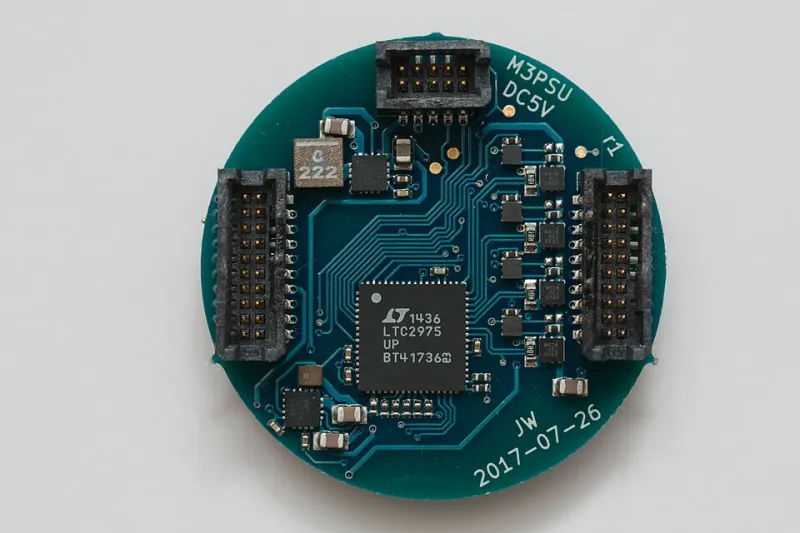
Photo: Adam Greig from Cambridge, UK, CC BY-SA 2.0, via Wikimedia Commons
The Hidden Cost of Forgetting
Every hardware company has a version of the room. Sometimes it is a climate-controlled storage unit in Sunnyvale. Sometimes it is a series of labeled bins stacked in a San Jose warehouse. Inside: circuit board revisions that never passed thermal testing, enclosures machined to tolerances that proved impossible to manufacture at scale, battery configurations that delivered promising energy density until cycle degradation made them commercially unviable.
For decades, the instinct was to treat these artifacts as waste—sunk costs to be written off, physically and intellectually. That instinct is changing.
A growing cohort of hardware-focused companies, from consumer electronics startups to defense-adjacent deep-tech firms, is investing in the systematic documentation and structured reuse of failed prototype iterations. The argument is straightforward, even if the execution is not: every failed design encodes a constraint that the next engineer on a related problem will eventually rediscover. Paying to rediscover it is expensive. Paying to catalog it once and retrieve it indefinitely is not.
What Failure Documentation Actually Looks Like
The concept sounds intuitive. The operational reality is considerably more demanding.
Effective prototype documentation requires more than photographs and part numbers. Engineers at firms that have invested seriously in this practice describe a minimum viable record as including: the design intent, the specific failure mode observed, the test conditions under which failure occurred, the hypotheses that were generated and tested in response, and the reason the iteration was ultimately abandoned rather than continued. That last element—the decision rationale—is frequently the most valuable and the most difficult to capture, because it often lives in a single engineer's working memory.
Some organizations are addressing this through structured exit interviews conducted whenever a prototype line is formally closed. Others are integrating documentation requirements directly into their engineering project management platforms, making closure of a prototype ticket contingent on completing a failure summary. A smaller number of firms have begun experimenting with large language model tools trained on their internal engineering records, attempting to make historical failure data queryable in natural language.
The common thread across these approaches is a recognition that the knowledge is already being generated—it simply is not being retained.
The Competitive Moat Argument
Why would a company invest resources in cataloging what did not work? The answer, articulated by hardware veterans across the industry, is that failure libraries create a form of institutional knowledge that is genuinely difficult for competitors to replicate.
A startup entering a new product category can acquire talented engineers. It can license intellectual property. It can purchase equipment and establish testing infrastructure. What it cannot easily acquire is the accumulated record of which approaches its competitors already tried and abandoned, and why. That record, when properly maintained, functions as a map of the design space—not a complete map, but one that marks where significant terrain has already been explored.
This dynamic is particularly pronounced in hardware categories characterized by long development cycles and high tooling costs: medical devices, industrial sensors, aerospace components, power electronics. In these domains, a single failed prototype iteration can represent months of engineering time and hundreds of thousands of dollars in fabrication costs. The value of not repeating that iteration, even once, can exceed the entire cost of a documentation program.
Startups as Early Adopters
Larger, more established hardware companies face a structural obstacle to building failure libraries: they have already discarded decades of prototype history, and the engineers who understood those failures have frequently moved on. The institutional memory cannot be recovered because it was never recorded.
Early-stage hardware startups, paradoxically, are better positioned to build these practices from the beginning. Several venture-backed firms in the battery technology and robotics sectors have made failure documentation a founding-level commitment—establishing the systems and cultural norms before the organization is large enough to resist them.
The cultural dimension is non-trivial. Engineers, particularly in high-performance engineering cultures, are not always naturally inclined to document failure in detail. There is a residual stigma attached to work that did not succeed, and a competing pressure to move quickly toward the next iteration rather than pausing to analyze the last one. Organizations that have successfully built failure documentation practices report that leadership modeling matters enormously: when senior engineers and founders treat their own failed iterations as valuable data rather than embarrassments, the organizational norm shifts.
From Archive to Active Infrastructure
The most sophisticated implementations of this concept move beyond passive archiving toward active knowledge infrastructure. Rather than maintaining a searchable database that engineers consult when they think to, these organizations integrate failure records into the design review process itself—surfacing relevant historical iterations automatically when new designs share geometric, material, or functional characteristics with previous work.
This integration requires investment in data architecture that most hardware companies have not historically prioritized. Engineering data tends to live in disconnected systems: CAD files in one platform, test results in another, project notes in a third. Building a unified failure knowledge base requires either consolidating these systems or building connective infrastructure across them—neither of which is a trivial undertaking.
The companies making this investment, however, are beginning to articulate a return on it in concrete terms: reduced redundant testing, faster identification of viable design paths, and more informed decisions about when to abandon an approach versus when to continue iterating.
The Longer View
The prototype graveyard, reframed, is not a monument to wasted effort. It is an empirical record of a company's accumulated encounter with physical reality—with the limits of materials, manufacturing processes, thermal management, and human factors. That record, properly maintained and made accessible, is among the more durable competitive assets a hardware organization can build.
The firms that recognize this earliest will not necessarily build better individual products. They will build better organizations—ones whose collective intelligence compounds over time rather than resetting with every personnel change or product pivot. In a hardware development environment defined by long timelines and high iteration costs, that compounding effect may ultimately prove more consequential than any single technical breakthrough.