Physics First: Why the Next Generation of Scientific AI Is Being Built Around Laws, Not Just Data
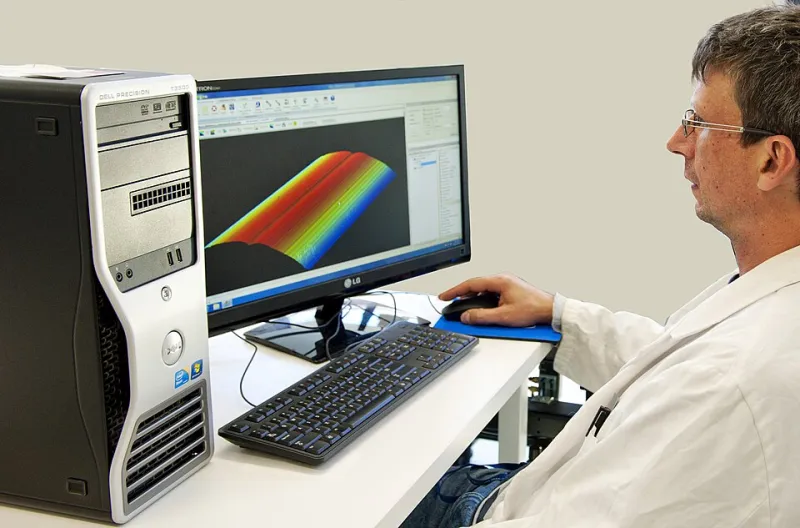
Photo: Flickr user ipasadelaide (artist: Jennie Groom), CC BY 2.0, via Wikimedia Commons
The Problem With Purely Statistical Models
The past decade of machine learning progress has been, in substantial measure, a story about scale. Larger datasets, larger models, and larger compute budgets have driven performance improvements across domain after domain. The implicit assumption underlying much of this progress is that sufficient data, processed by sufficiently expressive models, will approximate any function—including the complex, nonlinear relationships that govern physical and chemical systems.
In practice, this assumption has proven problematic in precisely the domains where accurate prediction matters most. Drug discovery pipelines have generated molecules that perform brilliantly in silico and fail in vitro. Battery models have predicted charge cycle performance that physical cells do not reproduce. Materials property predictions have directed synthesis efforts toward compounds that turn out to be thermodynamically unstable.
The core issue is not insufficient data or inadequate model capacity. It is that purely statistical models learn correlations present in their training sets without any mechanism to enforce consistency with the physical laws that constrain the systems being modeled. They can extrapolate in ways that violate conservation of energy, predict molecular geometries that are sterically impossible, or generate material property combinations that no known phase diagram permits.
Embedding Constraints at the Architecture Level
Physics-informed machine learning addresses this limitation by incorporating physical constraints directly into model design rather than hoping they emerge from data. The approaches vary considerably across subfields, but share a common logic: the model is not permitted to produce outputs that violate known governing equations, regardless of what patterns in the training data might otherwise suggest.
In practice, this can mean several different things. In some implementations, physical laws are encoded as hard constraints that the model's output must satisfy—conservation laws, symmetry requirements, thermodynamic stability conditions. In others, violations of physical constraints are incorporated as penalty terms in the loss function, making outputs that violate physics less likely even if not strictly impossible. More sophisticated architectures embed physical relationships into the model's internal representations, effectively teaching the model to reason in terms of physical quantities rather than raw statistical features.
The neural operator framework, which has gained significant traction in computational fluid dynamics and materials modeling, represents one mature instantiation of this approach. Rather than learning a mapping from inputs to outputs, neural operators learn mappings between function spaces—a formulation that naturally accommodates the continuous, field-theoretic character of many physical problems.
Where the Results Are Coming In
The most compelling validation of physics-informed approaches is appearing in fields where the cost of false leads is high and the gap between computational prediction and experimental reality has historically been large.
In battery materials research, groups at several national laboratories and university programs have demonstrated that physics-informed models trained on density functional theory calculations can predict ionic conductivity and electrochemical stability with significantly lower false positive rates than purely data-driven alternatives. The practical implication is fewer synthesis runs chasing computationally predicted candidates that turn out to be experimentally unviable—a meaningful reduction in both cost and timeline for a development process that can span years.
Drug discovery applications are producing similarly encouraging signals. Molecular dynamics simulations informed by quantum mechanical constraints are generating binding affinity predictions that hold up at early experimental validation stages at higher rates than predictions from structure-activity relationship models trained on historical assay data alone. The difference is not dramatic in absolute terms, but in a development pipeline where each experimental validation step is expensive and time-consuming, even modest improvements in computational prediction fidelity have significant downstream consequences.
Materials science more broadly—encompassing applications from semiconductor development to structural alloys to polymer design—is emerging as perhaps the most active domain for physics-informed AI integration. The field's theoretical foundations are mature enough to provide well-defined physical constraints, and the experimental validation cycle is fast enough to generate meaningful feedback on computational predictions within research timelines.
The Integration Challenge
Despite the promise of these approaches, their adoption is not without friction. Building physics-informed models requires a combination of domain expertise and machine learning capability that is not uniformly distributed across research institutions. The physicists and chemists who understand the governing equations are not always the same people who can implement and train neural network architectures, and the machine learning engineers who can build the models do not always have deep fluency in the physical domains they are being asked to constrain.
Several research groups and commercial AI-for-science companies have responded to this by building modular frameworks that allow domain scientists to specify physical constraints in relatively accessible mathematical form, which are then incorporated into model training pipelines by machine learning specialists. This division of labor is not a complete solution—the two communities still need enough shared language to communicate effectively—but it has meaningfully lowered the barrier to entry for physics-informed modeling in applied research contexts.
Computational cost is a separate consideration. Enforcing physical constraints during training and inference is generally more expensive than unconstrained optimization, and the most rigorous constraint implementations can be substantially more expensive. For applications where the cost of experimental false leads is high, this overhead is frequently justified. For higher-throughput screening applications where some false positive rate is acceptable, the tradeoff calculation is less clear.
Toward More Reliable Computational Science
The deeper significance of physics-informed AI may be less about any specific performance benchmark and more about what it represents epistemologically. A model that is constrained to respect physical law is making predictions that are, at minimum, physically plausible—a guarantee that purely statistical models cannot provide.
This distinction matters not just for the accuracy of individual predictions but for the reliability of the scientific inference that depends on them. Computational science tools that routinely generate physically implausible outputs erode confidence in computational approaches generally, making it harder to justify resource allocation toward computational prediction and away from brute-force experimental screening.
Physics-informed models, by contrast, offer a more defensible basis for trusting computational predictions—not because they are infallible, but because their failure modes are constrained in ways that make them more interpretable and more correctable. That may ultimately prove to be their most significant contribution to the practice of experimental science.