Wreckage as Resource: How Systematic Failure Is Becoming a Competitive Advantage in Product Development
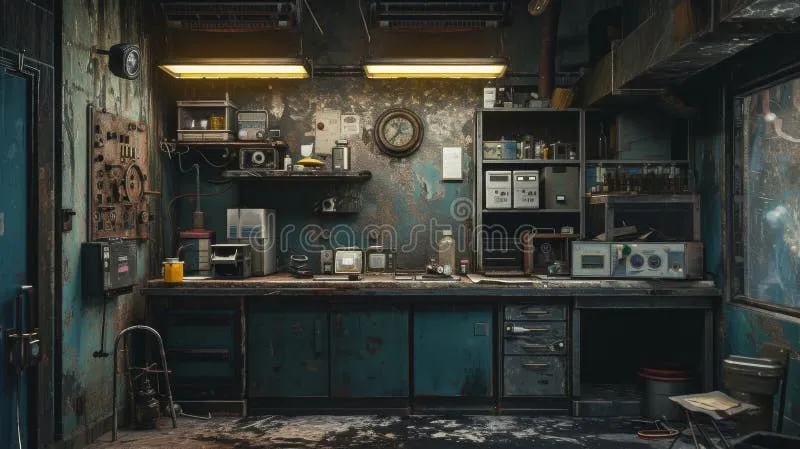
Photo: engineering lab abandoned prototype hardware workshop, via thumbs.dreamstime.com
There is a particular kind of silence that settles over a project the day it is canceled. Engineers close their laptops. Slack channels go dormant. Hardware that consumed months of iteration gets boxed and shelved. In most organizations, that silence is the end of the story.
But a growing number of technology companies and research-driven startups are refusing to let that silence stand. Instead, they are treating the wreckage of failed experiments as primary source material—something to be catalogued, analyzed, and deliberately mined for the next cycle of development. The discipline emerging from this practice does not have a universally agreed-upon name, but its practitioners describe it in similar terms: the systematic conversion of failure into institutional knowledge.
The economics, it turns out, are compelling.
The Hidden Cost of Discarded Prototypes
Product development in the technology sector has never been inexpensive. A mid-stage hardware prototype can represent anywhere from $200,000 to several million dollars in engineering hours, materials, and testing infrastructure. When that prototype fails—whether due to technical limitations, market misalignment, or regulatory friction—organizations typically absorb the sunk cost and redirect resources forward. What they rarely do is conduct a structured post-mortem rigorous enough to generate transferable insight.
This gap is not born of indifference. It is born of urgency. In competitive markets, the pressure to move toward the next viable concept is immediate, and retrospective analysis can feel like an organizational luxury. The result, however, is what researchers at several US-based innovation consultancies have begun calling "failure debt"—the accumulated cost of repeatedly encountering the same obstacles because earlier encounters were never properly documented.
Failure debt compounds. Organizations that do not systematize their lessons from abandoned projects tend to re-learn them, at full cost, in subsequent development cycles. The prototype graveyard grows, but the intelligence it could yield remains locked inside it.
When Failure Spawns Success
Some of the most well-documented examples of productive failure come from large technology firms with the resources to maintain long development timelines. The pattern is consistent: a project is terminated for legitimate reasons, but a subsidiary component—a novel material, an unanticipated interaction, an engineering workaround—survives and eventually becomes the foundation of something commercially significant.
The challenge for most organizations is that these spin-off discoveries tend to be accidental rather than deliberate. They emerge because a perceptive engineer happened to recognize the residual value of a discarded mechanism, not because the organization had a process for identifying it. Systematizing that recognition is the central problem that forward-thinking R&D teams are now attempting to solve.
Several US-based hardware startups have implemented what they describe as "failure audits"—structured reviews conducted at the moment of project termination rather than months later, when institutional memory has degraded and key personnel have moved on. These audits are not post-mortems in the conventional sense. They are less concerned with assigning causality to the failure and more focused on inventorying the residual assets: novel techniques developed during the project, unexpected data generated during testing, and unresolved technical questions that may be worth revisiting under different constraints.
The distinction matters. A conventional post-mortem asks, "Why did this fail?" A failure audit asks, "What did this produce that we have not yet accounted for?"
Distinguishing Productive Failure from Wasteful Failure
Not all failure is instructive, and one of the more important contributions of this emerging discipline is its attempt to draw a rigorous distinction between the two categories.
Productive failure, in the framework developed by several R&D strategists, shares certain characteristics. It advances the organization's understanding of a real constraint—technical, material, or market-based. It generates data that did not previously exist. And it eliminates a hypothesis that, had it remained untested, would have continued to consume planning resources.
Wasteful failure, by contrast, tends to share a different set of characteristics. It replicates a failure mode the organization has already encountered. It occurs because testing was deferred until late in the development cycle, when reversal is most expensive. Or it results from insufficient scoping—a project that was never clearly defined enough to produce a meaningful negative result.
The practical implication is that organizations serious about productive failure must invest upstream, in the design of experiments rather than solely in their execution. A well-designed experiment that fails cleanly is worth considerably more than a poorly scoped project that collapses ambiguously.
Building the Infrastructure for Institutional Memory
The organizational challenge is not philosophical—most technology leaders readily accept that failure is an inherent feature of innovation. The challenge is infrastructural. How does an organization build systems capable of capturing, storing, and retrieving the intelligence embedded in failed work?
Some firms have approached this through knowledge management platforms specifically designed for R&D environments, where failed experiments are logged alongside their successful counterparts and tagged with searchable attributes. Others have embedded dedicated roles—sometimes called "R&D archivists" or "failure analysts"—within their product teams, tasked with conducting structured interviews at project closure and maintaining living documentation of terminated work.
The cultural dimension is equally significant. In organizations where failure carries reputational risk, documentation of failed projects tends to be sparse and self-protective. Leaders who want their teams to generate honest failure records must first establish environments where honesty about failure is not professionally penalized. This remains, by most accounts, the harder of the two problems to solve.
The Competitive Case
For organizations willing to make the investment, the returns are beginning to be measurable. Teams that maintain rigorous failure documentation report shorter iteration cycles, reduced duplication of effort across product lines, and a higher rate of what might be called "serendipitous transfer"—the application of a technique or finding from one abandoned project to a new one.
Perhaps more importantly, the practice appears to shift organizational culture in a direction that supports more ambitious experimentation. When engineers know that their failed work will be studied rather than discarded, they are more likely to attempt experiments at the edges of known possibility—the zone where the most significant breakthroughs tend to originate.
The prototype graveyard, properly managed, is not a monument to waste. It is a library. And in the current environment, where the pace of technological development is accelerating and the cost of re-learning old lessons is rising, organizations that know how to read that library will carry a meaningful advantage over those that do not.